Resources For Support Coordinators
What is a behaviour support practitioner?
Discover what a behaviour support practitioner does, the qualifications and NDIS registration behind the role, and what to look for when choosing one.

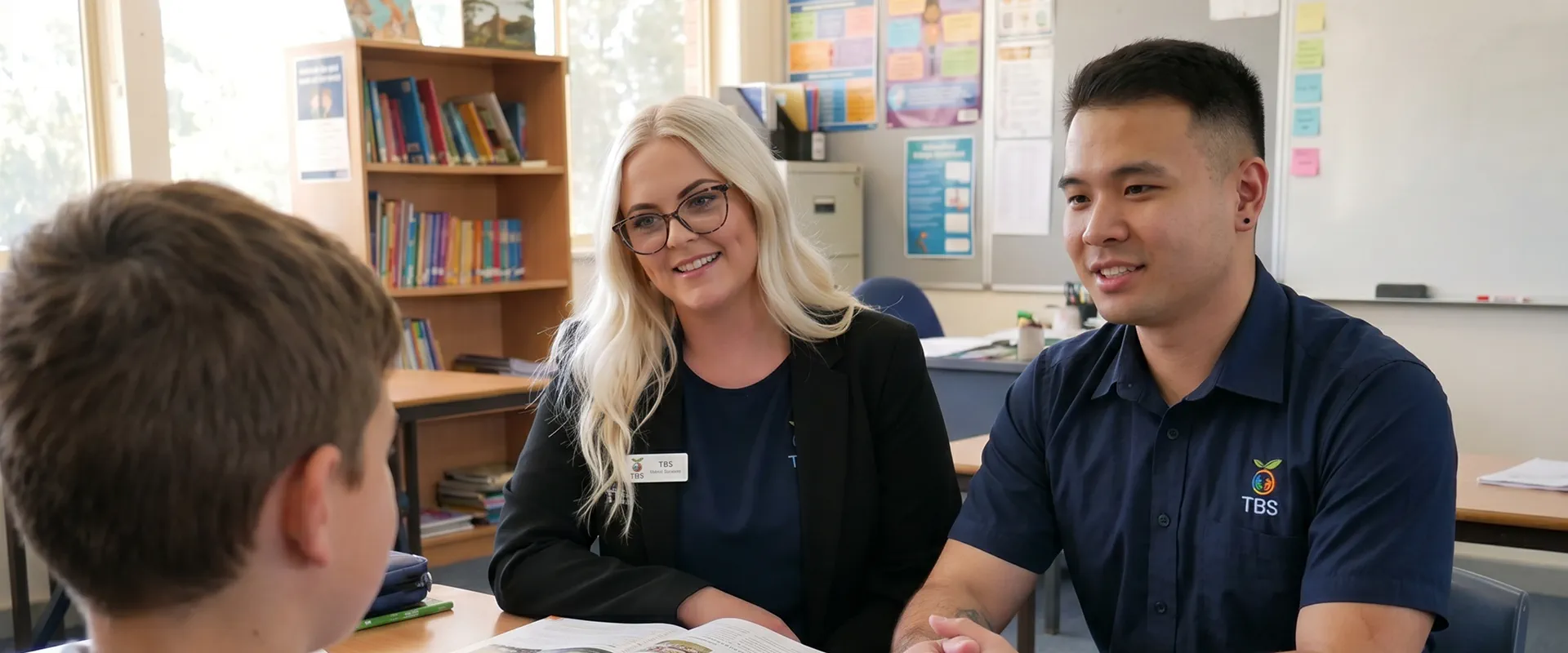
A behaviour support practitioner is a clinician registered with the NDIS Quality and Safeguards Commission to provide positive behaviour support to NDIS participants. They assess behaviours of concern, write behaviour support plans, and work with participants and their support teams to put those plans into practice and review them over time. They are the only practitioners authorised to write behaviour support plans for NDIS participants.
If a behaviour support practitioner has been recommended for someone you support, or you’ve seen the title and want to know what it actually means, this guide explains the role: what these clinicians do, the qualifications and registration behind the title, the NDIS capability levels, and what to look for when choosing one.
Key takeaways
- A behaviour support practitioner is registered with the NDIS Commission and is the only professional who can write a behaviour support plan for an NDIS participant.
- Their work spans assessment, planning, training and coaching support teams, review and reporting, and advocacy.
- The NDIS recognises four capability levels – Core, Proficient, Advanced, and Specialist – which should match the complexity of the participant’s needs.
- There is no single qualification pathway; what matters is NDIS registration and meeting the Commission’s competency requirements.
Understanding the role
Behaviour support practitioners sit at the centre of how positive behaviour support is delivered under the NDIS. When someone is displaying behaviours of concern, the practitioner is the clinician responsible for working out why, and for turning that understanding into a practical plan the people around the participant can follow.
The role carries one responsibility that no other practitioner holds: where a plan needs to include regulated restrictive practices, the behaviour support practitioner is the only person who can document and authorise them. That responsibility comes with strict legal and ethical obligations.
It’s worth knowing what that means in plain terms. A restrictive practice is anything that limits a person’s rights or freedom of movement to keep them or others safe. Because these practices restrict someone’s liberty, they are tightly regulated: where one is genuinely necessary, the practitioner must document it, ensure it is authorised under the relevant legislation, and build in a plan to reduce and ultimately remove it over time.
A core part of a behaviour support practitioner’s job is finding proactive strategies that make restrictive practices less necessary, not more.
Beyond that, the role blends three things: clinical assessment skill, a practical understanding of why behaviour happens, and the people skills to communicate clearly with participants, families, carers, and support workers across very different environments – homes, schools, workplaces, and the community.
Behaviour support practitioner, behaviour therapist, PBS practitioner – what’s the difference?
You may come across several titles that all describe broadly the same role. “Behaviour support practitioner,” “positive behaviour support practitioner,” “PBS practitioner,” and sometimes “behaviour therapist” are generally used to mean a practitioner who delivers positive behaviour support.
Within the NDIS, the formal term is behaviour support practitioner, and it’s the registration with the NDIS Commission, not the exact job title, that determines whether someone can write a behaviour support plan.
If you’re comparing practitioners, focus on registration and capability level rather than the wording of the title.
What does a behaviour support practitioner do?
The day-to-day work covers several distinct activities:
Assessment
Practitioners conduct Functional Behaviour Assessments to understand the reasons behind a behaviour. This means interviews with the key people in the participant’s life, direct observation, and a review of existing documentation – building a picture of what the behaviour is communicating.
Planning
Practitioners write behaviour support plans, including interim plans for urgent situations and comprehensive plans once a full assessment is complete. These set out proactive strategies to prevent behaviour, reactive strategies for when it occurs, teaching goals, and – where applicable – regulated restrictive practices with a clear plan to reduce them.
Training and coaching
A plan only works if the people around the participant can carry it out. Practitioners train and coach families, support workers, school staff, and everyone else in the support network. The quality of this training has a direct effect on outcomes – it is not an add-on to the work, it is central to it.
Review and reporting
Practitioners review plans regularly and produce progress reports for the NDIS, documenting outcomes, what has changed, and the next clinical steps. This keeps the plan current and accountable.
Advocacy
Where a participant’s NDIS plan does not adequately fund or support their needs, a practitioner may provide a Letter of Recommendation to support a plan review, helping ensure the participant can actually access the support they require.
The NDIS behaviour support capability framework
Not all behaviour support practitioners work at the same level of complexity. The NDIS Commission sets out four capability levels, which describe how experienced a practitioner is and the kinds of situations they’re equipped to handle:
- Core. Works with participants who have straightforward needs, under supervision. Most practitioners entering the field begin here.
- Proficient. Works independently with a broader range of participants and presentations, including some complexity.
- Advanced. Has significant clinical experience and can support complex, high-risk, and multi-layered presentations.
- Specialist. Has expert knowledge in specific areas such as forensic behaviour support, dual diagnosis, or acute mental health. This is the highest level.
What this means for your family: you don’t need to memorise the levels. The practical point is simply that the practitioner’s experience should match how complex the situation is. The more complex or high-risk the presentation, the more experienced the practitioner should be – and it’s completely reasonable to ask a provider which level a practitioner works at, and whether they’ve worked with situations like yours before.
What qualifications does a behaviour support practitioner need?
People are sometimes surprised to learn there’s no single degree that makes someone a behaviour support practitioner. Practitioners come from a range of professional backgrounds – psychology, social work, occupational therapy, speech pathology, education, and specialist behaviour support programs among them. What unites them isn’t one qualification; it’s being assessed as competent and registered to do the work.
That registration is the part that matters. To register as a behaviour support practitioner, a person must demonstrate they meet the competency requirements of the NDIS Behaviour Support Capability Framework and comply with the NDIS Practice Standards. In Western Australia, they must also follow the Disability Services Act 2014 (WA) where regulated restrictive practices are involved. In short: rather than checking someone’s degree, the thing to confirm is that they are NDIS-registered for behaviour support.
What to look for when choosing a practitioner
Whether you’re choosing a practitioner for yourself, a family member, or a client you support, a few things are worth checking:
- Registration status. Confirm the practitioner is registered with the NDIS Commission. You can verify this through the NDIS Provider Finder.
- Capability level. Ask about the practitioner’s capability level and their experience with presentations similar to the participant’s needs.
- Availability. Ask about current caseload and response times. No waitlist is a meaningful indicator that support can begin promptly.
- Communication approach. Consider how the practitioner communicates with families and support teams. Because implementation success depends on the quality of training and coaching, this matters as much as clinical skill.
- Compliance record. Ask whether the provider has received any non-conformities on NDIS audits. It’s a direct indicator of clinical and administrative standards.
If you’d like to see who you’d actually be working with, you can meet the registered behaviour support practitioners at Target Behaviour Services.
Common Questions
-
What is a behaviour support practitioner in simple terms?
They are an NDIS-registered clinician who works out why a person’s behaviours of concern are happening, writes a behaviour support plan to address them, and supports the people around the person to put that plan into practice.
-
Can a behaviour support practitioner work with adults as well as children?
Yes. Behaviour support practitioners work with people of all ages, from early childhood through to older adulthood. Some practitioners specialise in paediatric presentations; others have experience across the full age range.
-
What is the difference between a behaviour support practitioner and a psychologist?
Psychologists are registered under AHPRA and provide a broad range of psychological services. Behaviour support practitioners are registered with the NDIS Commission specifically for the purpose of providing positive behaviour support. A psychologist may also be a registered PBS practitioner if they meet the capability framework requirements.
-
Can a behaviour support practitioner document restrictive practices?
Practitioners who meet the relevant capability requirements can document regulated restrictive practices in a behaviour support plan, subject to authorisation requirements under Western Australian legislation. Any restrictive practice must be included in the plan with a clear reduction goal.
-
How do I verify a practitioner is registered?
The NDIS Provider Finder (provider.ndis.gov.au) allows you to search for registered providers and confirm their registration status and support categories.
On the hunt to find the perfect PBS practitioner for your needs?
Our practitioners are experienced across a wide range of presentations, ages, and settings. Get in touch and we will help you understand how we can support your client or family member.
Continue Reading
-
Read Article
What is Positive Behaviour Support?
Positive behaviour support looks at why a behaviour happens, not just how to stop it. Understand the principles behind PBS, who it helps, and how it's funded through the NDIS.
-
Read Article
What is a positive behaviour support plan?
A behaviour support plan turns an assessment of why a behaviour happens into practical, personalised strategies. Learn what goes in one, the two types, and who can write it.
-
Read Article
What are positive behaviour support strategies?
Good behaviour support strategies are never one-size-fits-all. Learn how PBS strategies are chosen, what they look like day to day, and how you can support them at home.