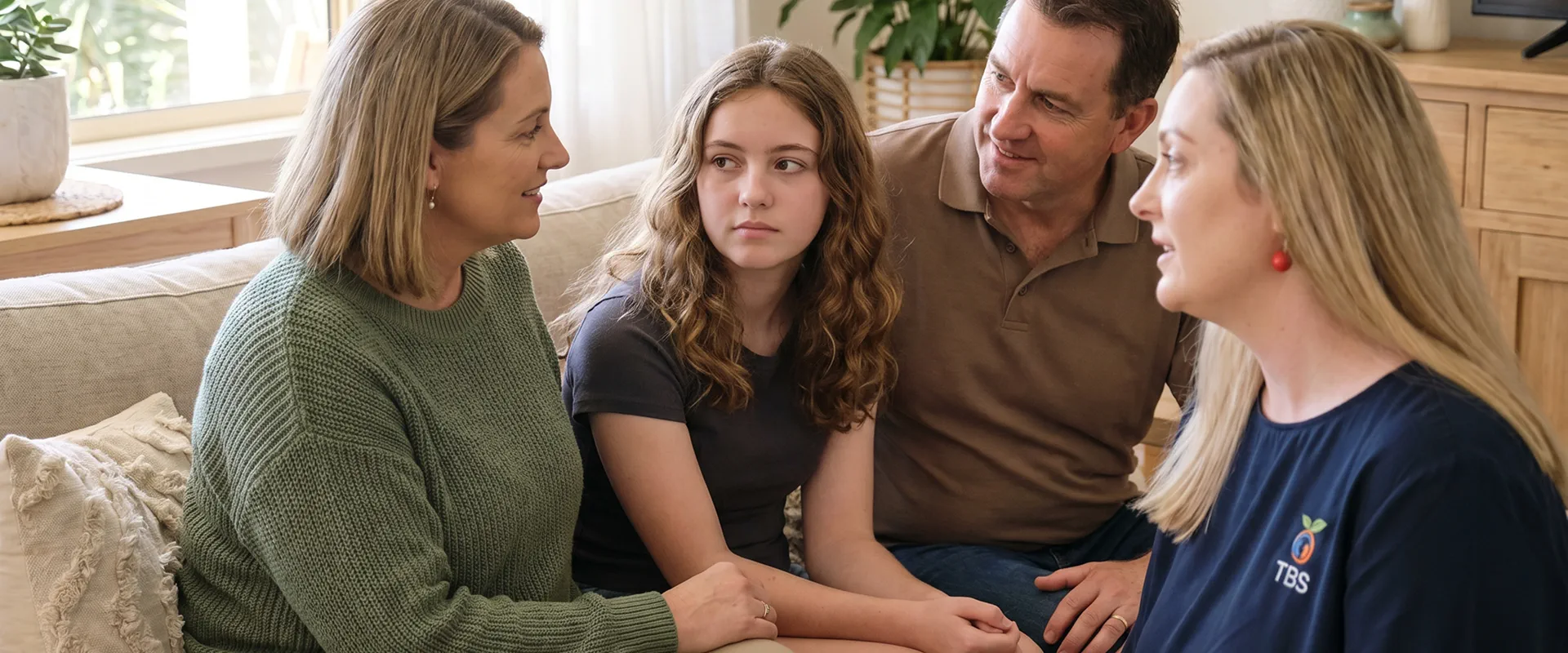

Families seeking clarity and direction
If you’re trying to understand a family member’s behaviour and why it happens, what it’s communicating, and what might actually help, an assessment gives you the clarity to move forward with confidence.
Services
Understanding why a behaviour is happening is the first step to changing it. Our evidence-based assessments identify the triggers, the function, and the contributing factors behind behaviour – the foundation of every effective support plan.

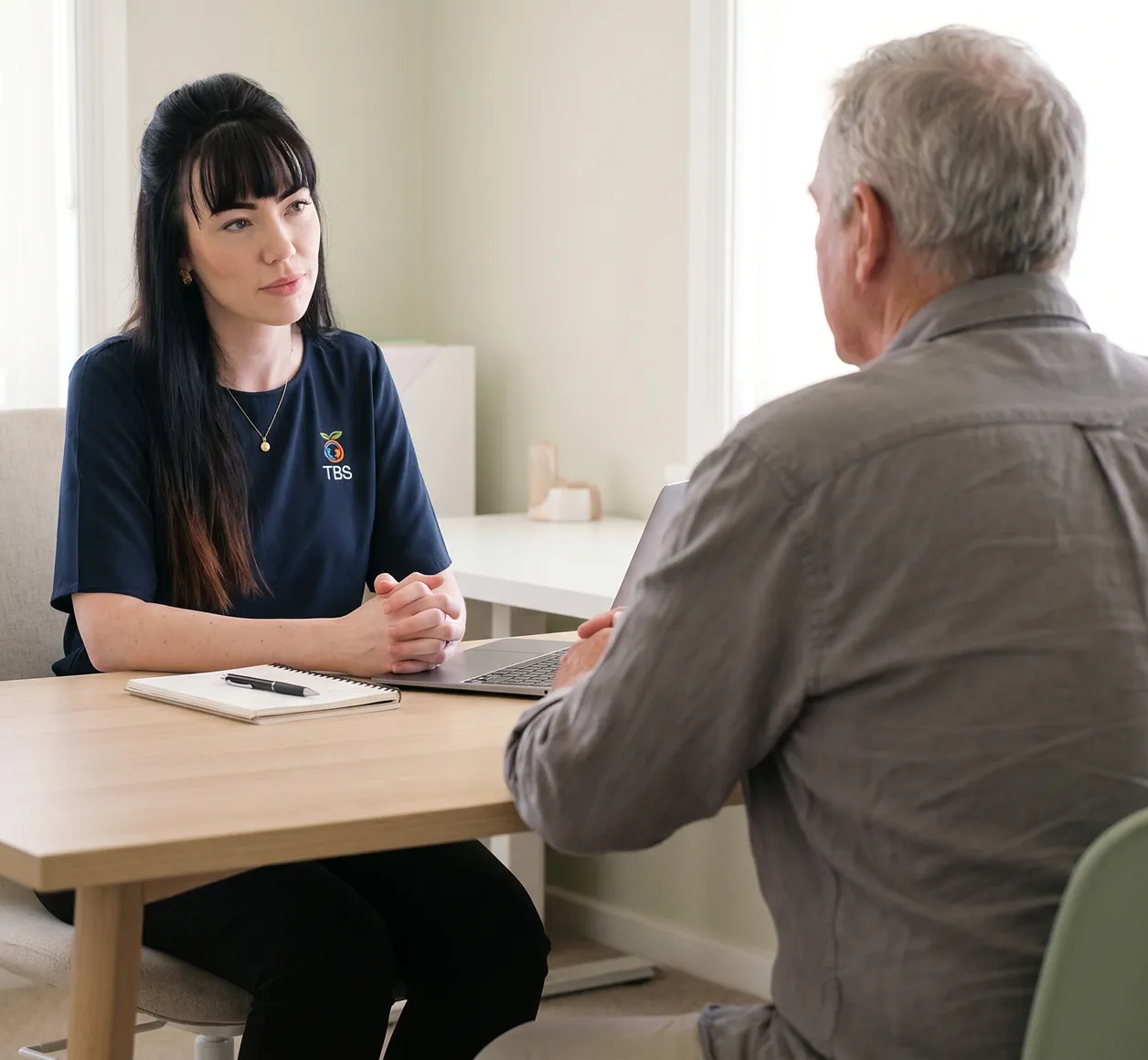
A functional behaviour assessment, or FBA, is the first step in Positive Behaviour Support: an evidence-based clinical assessment that identifies why a behaviour is happening. It looks at the triggers, the function the behaviour serves, and the factors driving it, and it’s the foundation every effective behaviour support plan is built on.
If you’ve tried change after change and nothing’s worked, there’s usually a reason. The behaviour is happening for a cause that hasn’t been understood yet. Behaviour is almost always communication: an unmet need, a way of coping, a response to something around the person. An FBA is how we find that cause, instead of guessing at it.
To do that, we draw on more than one source. We gather information through structured observation across different settings, conversations with the participant, their family, carers and support workers, and a review of relevant records and history. The findings are written up in a clear, evidence-based report that becomes the foundation for the Comprehensive Behaviour Support Plan that follows.
Without a clear understanding of why a behaviour is happening, strategies tend to be hit-and-miss, and short-lived. The assessment is what makes the difference between guessing and genuinely helping. You can see where it fits in our full step-by-step process, and we conduct assessments in person across Perth and, where appropriate, by telehealth across regional WA.
If you’re trying to understand why a behaviour is happening, you’re already asking the right question. Here’s who an assessment is designed to help.
If you’re trying to understand a family member’s behaviour and why it happens, what it’s communicating, and what might actually help, an assessment gives you the clarity to move forward with confidence.
When behaviours are becoming more frequent, more intense, or harder to manage, an assessment establishes a clear clinical baseline and points toward targeted, effective change.
An assessment is the necessary first step before a Comprehensive Behaviour Support Plan can be developed, and it gives you clear, timely reporting to support your planning.
We work with schools and education staff to understand behaviour in the classroom and provide practical, achievable recommendations for educators and support staff.
A completed assessment provides strong clinical evidence to support a behaviour support funding request ahead of the next review.
Frankie SSupportive knowledgeable team, with strong values and a clear focus on quality, collaboration and doing what’s best for Participants.

A Functional Behaviour Assessment involves more than a single appointment. Here’s what to expect, from first contact to finished report.
Getting started
Get in touch and tell us what’s happening. We’ll match the person with a clinician experienced in their situation and confirm what’s involved.
Gathering the full picture
We don’t rely on one conversation. We observe behaviour where it actually happens, and talk with the participant, family, carers, and support workers because the people who know the person best hold important pieces of the puzzle.
Looking across settings
Behaviour often looks different at home, at school, and in the community. We look across those settings to understand what’s really driving it, not just where it shows up.
Making sense of what we find
Our clinician analyses everything gathered to identify the function of the behaviour, such as what need it’s meeting, what triggers it, and what keeps it going.
Your assessment report
You receive a detailed, clearly written report setting out the findings and recommendations. This becomes the clinical foundation for the Comprehensive Behaviour Support Plan.
We work with participants who have an active NDIS plan. Not sure whether funding is available for behaviour support? Get in touch and we’ll help you understand your options.
Depending on the outcome of the assessment, we may recommend other Positive Behaviour Support services to help move things forward.

The detailed, long-term plan the assessment makes possible, built around the individual and bringing together strategies, skills and supports.

When things feel urgent and you can’t wait for the full assessment to finish, an interim plan keeps everyone safe in the meantime.
When families need clarity around behaviours of concern, they want a provider who will take the time to really understand and explain it clearly.
You have been so awesome. I was just super happy to be able to tell them how much you have saved us, especially after such a bad experience last time. You really are here for the people, and that really matters to me and so many other people. Everyone praises your excellent reports saying how clear and great they are. You should be super proud of yourself.
Thank you so much for all the effort you have put into this assessment/plan so far. You have managed to write such a comprehensive and detailed report highlighting all of the areas that Ella needs support in. It is the first time we have read a report/assessment about Ella that is so detailed and extremely accurate. Everything is spot on and describes Ella's needs and behaviours so well!
We had the best services from Faith and Rex from Target Behaviour Support. They were reachable when we needed them and they gave us clear working behaviour strategies on how our team could be efficient. Their reports were timeous and above all they have been consistent. I recommend their services anytime.
We have had the pleasure of working with Faith... and her professionalism, clinical insight, and consistency have been outstanding. She communicates clearly, works collaboratively with support teams, and always keeps the participant’s needs at the centre of her practice.
I have had consistently excellent experiences with Target. They always go above and beyond for their participants and bring a genuine, person centred approach to every single situation. They collaborate so professionally. Communication is clear, timely, and focused on achieving the best outcomes - every time.
From the very start, the support has been outstanding, and our whole family is genuinely happy with how things are going. We really appreciate the dedication and the clear communication, and the difference it's made in such a short time has been remarkable. It's reassuring to finally feel this well looked after.
We've achieved more in just a few months than we managed with our previous providers in years. The commitment and care really stand out, and it's been wonderful to watch the progress and the trust that's been built with our family. They genuinely go above and beyond, and we're so grateful for it.
They're always quick to respond when we reach out, and so understanding and supportive with it. They keep the person at the centre of everything and stay flexible whenever our needs change. Having someone this easy to work with has made a real difference.
Everything you need to know about Functional Behaviour Assessments – what they involve, how long they take, and what happens when they're done.
It’s the clinical process we use to work out why a behaviour is happening, such as identifying its function, triggers, and contributing factors through observation, conversations with the people who know the person, and a review of their history. The findings form the foundation of the behaviour support plan that follows.
It suits anyone whose behaviours of concern are getting in the way of everyday life, safety, or wellbeing, at any age, and across a wide range of conditions. Whether a behaviour is escalating, has appeared recently, or has been a long-standing worry, an assessment is the right starting point when you want to understand what’s really driving it rather than keep guessing.
An FBA is funded through the NDIS, under the Capacity Building, Improved Relationships category. If you’re not sure whether the funding is in the plan, get in touch and we’ll help you check. Where there’s a clinical case, we can recommend behaviour support funding be added at the next plan reassessment.
They’re two stages of the same process. The assessment is the investigation. It works out why a behaviour is happening. The behaviour support plan is what comes next, taking those findings and setting out what to do about them. You need the assessment first, because a plan built without understanding the cause is just guesswork. Once the FBA is complete, it becomes the foundation for the Comprehensive Behaviour Support Plan.
Wherever possible, yes. We conduct functional behaviour assessments in person across Perth, including in homes, schools, and community settings, and by telehealth for participants in regional WA. Doing the assessment where a behaviour actually happens gives us the clearest picture of what’s really going on.
Most assessments are completed within four to eight weeks of referral, depending on the complexity of the situation and how quickly we can gather information from the people who know the person. Where a behaviour is urgent and can’t wait, we can put an Interim Behaviour Support Plan in place so support starts straight away, while the full assessment continue
You’ll receive a detailed, clearly written report setting out what we found, what it means, and what we recommend. That report becomes the clinical foundation for the Comprehensive Behaviour Support Plan – the next step, where the findings turn into the practical strategies that support the person day to day. You can learn more about that here.