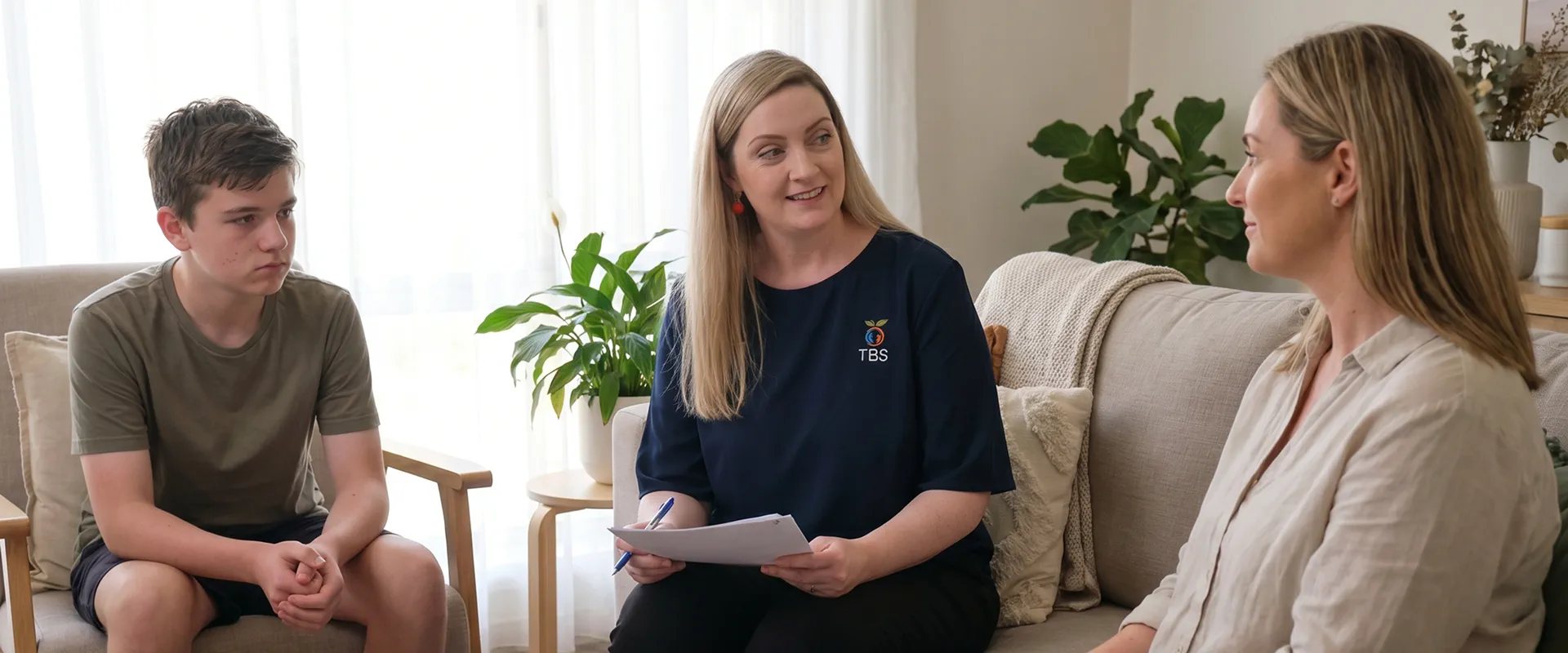

People approaching a plan reassessment
A thorough, well-evidenced report is one of the most powerful documents you can take into a reassessment. We write ours with that moment in mind from the start.
Services
Clear, clinically sound reporting that shows what's working, supports plan reassessments, and helps secure the funding needed to keep making progress.

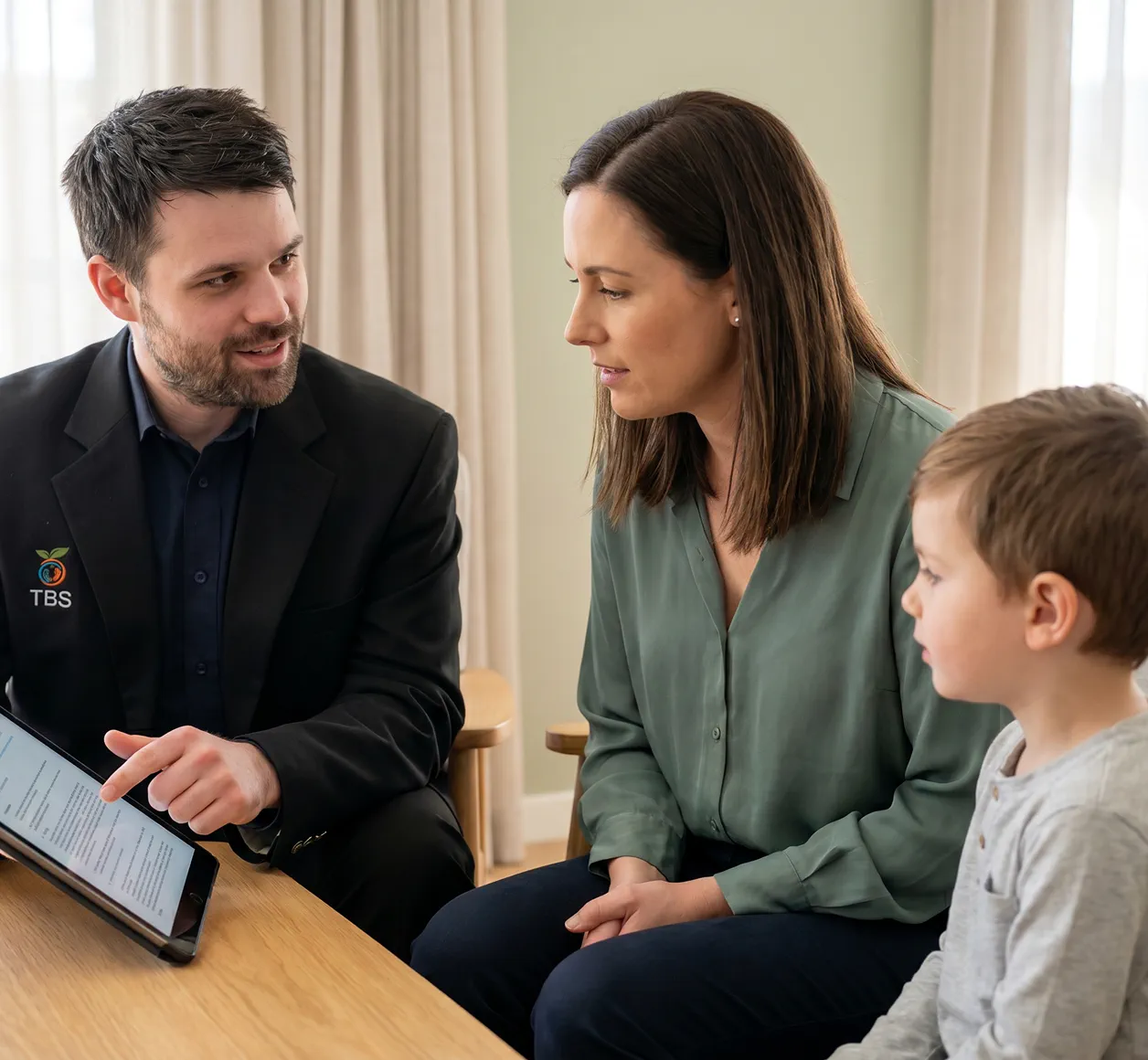
A behaviour support progress report is the evidence that keeps the right funding and supports in place, by showing how someone is tracking against the goals in their behaviour support plan.
A PBS progress report is a clinical document that measures a person’s progress against their plan and reports it to the NDIS at set intervals. As part of our positive behaviour support service, we produce these reports across the life of the plan, usually every six to twelve months.
For families, it answers the question sitting in the back of your mind: is this actually working? After months of effort, you get an honest account of what’s changed, written by the clinician who knows your family member, not a stranger reading a file.
For support coordinators and the NDIS, it’s the clinical evidence that justifies funding at a plan reassessment. And because we look across your whole NDIS plan, our reports flag where funding is falling short, not just in behaviour support, but across every category we can see is needed.
Most providers report on their part and stop there. We report on the whole picture.
Whether you’re tracking outcomes, preparing for a reassessment, or making the case for more funding, here’s who our progress reports are designed for.
A thorough, well-evidenced report is one of the most powerful documents you can take into a reassessment. We write ours with that moment in mind from the start.
If there’s a current Comprehensive Behaviour Support Plan in place, regular progress reporting is part of meeting NDIS requirements. We manage the process and deliver reports on time.
We work closely with support coordinators to deliver reporting on schedule and in a format that supports clear funding decisions so nothing stalls at reassessment.
Our reports routinely identify where funding is falling short. Where the evidence supports it, we include formal recommendations you can take into your next reassessment.
After months of effort, you deserve a clear, honest answer on whether things are improving. Our reports give you that – the real wins, and what’s still to come – so you’re never left guessing.
James WThe reporting has been excellent. It’s detailed and insightful, and the problem-solving has helped us understand what’s actually going on and what to do about it.

Regular, proactive reporting that keeps everything on track.
We agree on a reporting schedule
At the start of the service, we set a reporting schedule aligned to the plan’s milestones and the NDIS reassessment timeline, so a report is always ready when you need it, not scrambled together at the last minute.
We measure against the plan's goals
Throughout the plan, we gather data on what’s actually happening, like which strategies are being used, how the person is responding, and what’s changing. Real evidence, not impressions.
We analyse and write the report
The data is interpreted by the clinician who knows your family member or client, so the report reflects the real person, not a file. Because the same practitioner often follows the plan from the start, you get an honest read on what’s working, what isn’t, and why: the kind of insight only comes from someone who’s been there the whole way.
We deliver it where it counts
We provide the report on schedule and in a form your support coordinator, plan manager and the NDIS can act on, including any funding recommendations the evidence supports.
We use it to shape what's next
A progress report isn’t an endpoint. It informs whether the plan continues as-is, gets adjusted, or moves to a full reassessment, so the next phase is built on what we’ve actually learned, not on guesswork.
Not sure your current reports are doing their job? Whether they’re arriving late or a reassessment is looming, we’ll review where you stand and what your next report needs to cover.

A thorough plan shaped entirely around the individual, bringing together everyday strategies to prevent behaviours, ways to respond safely, and new skills to build over time. Where it's ever needed, any carefully governed restrictive practice is fully documented, with a clear plan to reduce it.
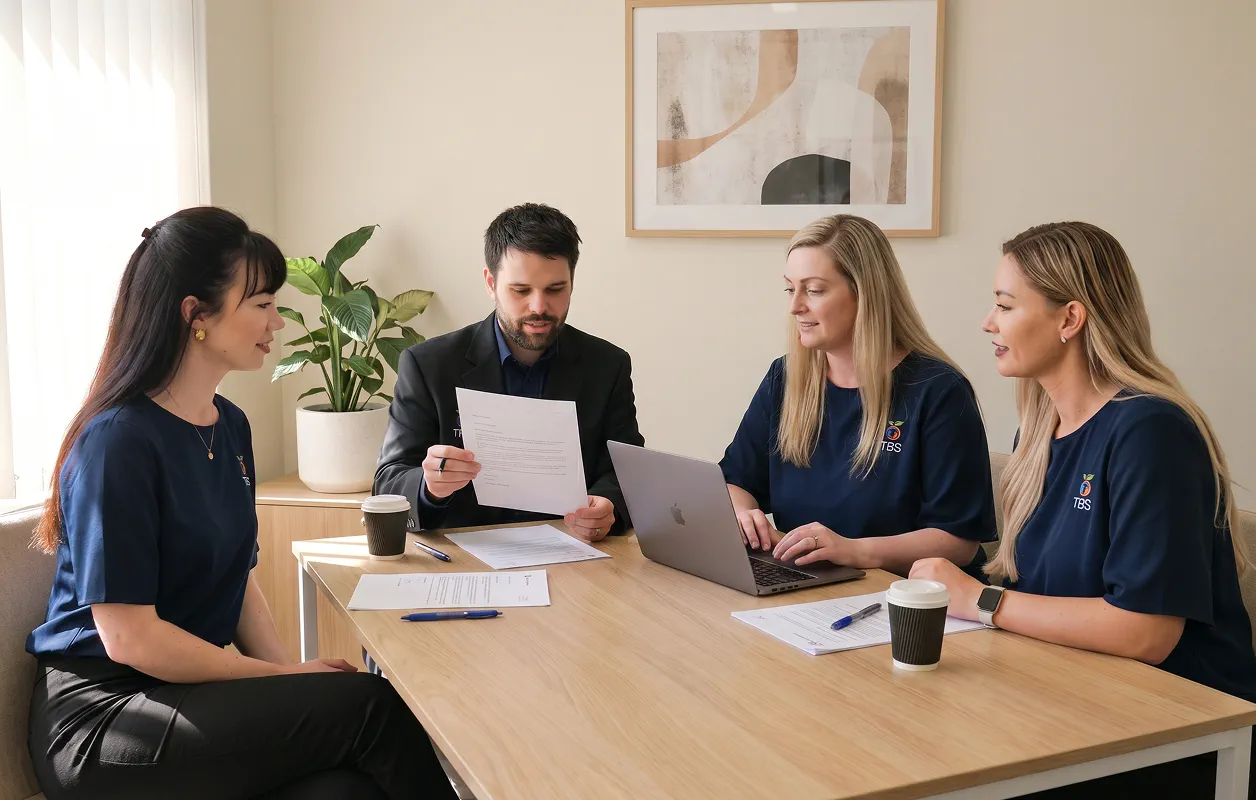
Funding doesn't always reflect what your family member actually needs. Our Letters of Recommendation make the clinical case to the NDIS for the right funding across every support category, not just behaviour support.
From families at home to coordinators at reassessments, here's what the people who rely on our reports have to say.
You have been so awesome. I was just super happy to be able to tell them how much you have saved us, especially after such a bad experience last time. You really are here for the people, and that really matters to me and so many other people. Everyone praises your excellent reports saying how clear and great they are. You should be super proud of yourself.
Thank you so much for all the effort you have put into this assessment/plan so far. You have managed to write such a comprehensive and detailed report highlighting all of the areas that Ella needs support in. It is the first time we have read a report/assessment about Ella that is so detailed and extremely accurate. Everything is spot on and describes Ella's needs and behaviours so well!
We had the best services from Faith and Rex from Target Behaviour Support. They were reachable when we needed them and they gave us clear working behaviour strategies on how our team could be efficient. Their reports were timeous and above all they have been consistent. I recommend their services anytime.
We have had the pleasure of working with Faith... and her professionalism, clinical insight, and consistency have been outstanding. She communicates clearly, works collaboratively with support teams, and always keeps the participant’s needs at the centre of her practice.
I have had consistently excellent experiences with Target. They always go above and beyond for their participants and bring a genuine, person centred approach to every single situation. They collaborate so professionally. Communication is clear, timely, and focused on achieving the best outcomes - every time.
From the very start, the support has been outstanding, and our whole family is genuinely happy with how things are going. We really appreciate the dedication and the clear communication, and the difference it's made in such a short time has been remarkable. It's reassuring to finally feel this well looked after.
We've achieved more in just a few months than we managed with our previous providers in years. The commitment and care really stand out, and it's been wonderful to watch the progress and the trust that's been built with our family. They genuinely go above and beyond, and we're so grateful for it.
They're always quick to respond when we reach out, and so understanding and supportive with it. They keep the person at the centre of everything and stay flexible whenever our needs change. Having someone this easy to work with has made a real difference.
Progress reports do more than meet a compliance requirement. Here are the questions we hear most about how ours work.
A behaviour support progress report, or a PBS progress report, is a formal clinical document that records how someone is tracking against the goals in their behaviour support plan. It’s a reporting requirement for registered NDIS providers, and a key document for plan reassessments.
Typically every six to twelve months, depending on the plan and its milestones. We agree the reporting schedule upfront as part of the service, so reports are ready ahead of any reassessment.
Progress reports are funded under your NDIS plan, usually through Improved Relationships supports, which is the same category that funds your behaviour support. The time to prepare a report is included within that funding.
It can. Our reports identify where funding is falling short – across support categories, not just behaviour support – and, where the evidence supports it, include formal recommendations. Many of our clients have used our reports to secure additional funding at reassessment. We can’t guarantee a funding outcome as that decision sits with the NDIS, but a well-evidenced report gives you the strongest possible case.
A progress report is the clinical document we produce, documenting outcomes and the case for funding. A plan reassessment is the NDIS administrative process that decides the person’s funding for the next plan period. A strong report becomes the evidence that informs that reassessment.
Yes, we can attend a reassessment meeting to provide supporting information on request. Our clinicians are experienced at communicating the clinical case clearly and effectively.